A Yellow Card for FIFA’s Brand
How quickly the world’s biggest branding success became its biggest communications challenge.
Only weeks ago, the FIFA World Cup accomplished something extraordinary.
It united continents.
It filled stadiums.
It energized cities.
It introduced millions of international visitors to America in ways no advertising campaign ever could.
In a recent WordSmith dispatch, I called it America’s Best Brand Campaign because visitors didn’t simply watch matches. They experienced a country. That experience became the story.
Now, the conversation has changed.
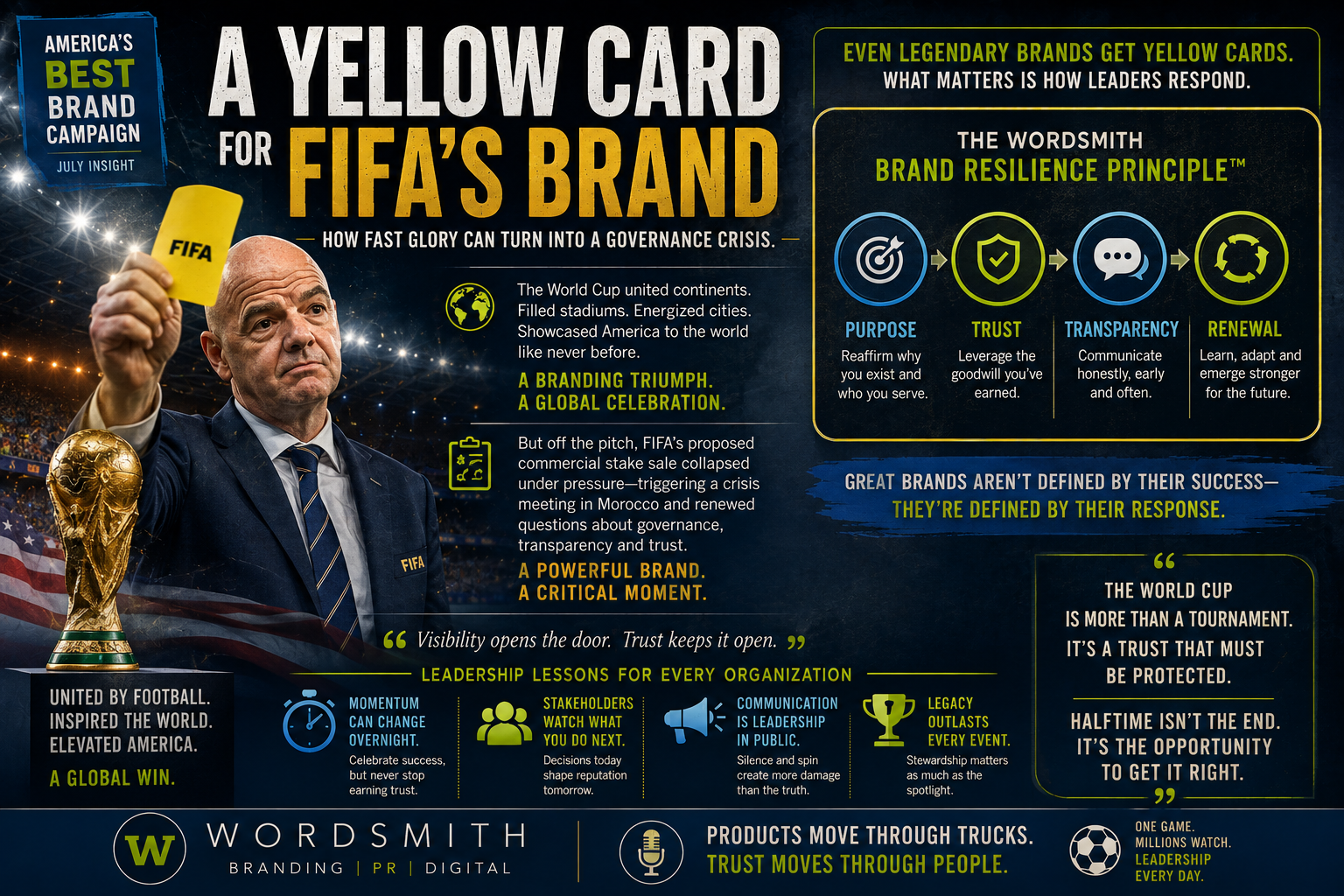
Reports this week indicate FIFA President Gianni Infantino convened senior leaders in Morocco after the governing body’s proposed plan to sell a stake in future World Cup commercial rights collapsed amid widespread opposition, triggering internal turmoil and renewed questions about governance.
If the World Cup earned FIFA applause …
This moment deserves a yellow card.
Not because organizations make mistakes. Every organization does. But because even the strongest global brands are ultimately measured by how they navigate moments of uncertainty.
Great Brands Are Bigger Than Great Events
The World Cup remains one of the world’s most powerful brands.
That hasn’t changed.
What has changed is the conversation surrounding its stewardship. One proposal shifted attention away from unforgettable moments on the pitch — and toward questions about transparency, governance and trust.
That’s an important reminder for every leader.
Your greatest success can quickly become yesterday’s headline.
Your response to today’s challenge often defines tomorrow’s reputation.
Every Brand Eventually Faces a Yellow Card
In soccer, a yellow card isn’t the end of the match.
It’s a warning. A reminder that something needs to change before the consequences become more serious.
Organizations experience yellow-card moments, too.
A failed initiative.
A communications breakdown.
A controversial decision.
An unexpected backlash.
Those moments don’t determine whether a brand survives. Leadership does.
The WordSmith Brand Resilience Principle™
Strong brands recover by returning to their foundation.
Purpose → Trust → Transparency → Renewal
Purpose reminds people why the organization exists.
Trust provides the goodwill to weather difficult moments.
Transparency restores confidence.
Renewal demonstrates that lessons have been learned.
Skip any one of those steps, and recovery becomes much more difficult.
The Difference Between Momentum and Legacy
One of the reasons I wrote America’s Best Brand Campaign was because the tournament demonstrated what happens when authentic experiences reinforce a brand’s promise.
People became ambassadors.
Cities became destinations.
Communities became hosts.
That kind of goodwill is priceless. It also creates a responsibility. Because stewardship matters as much as success. Winning attention is one achievement. Maintaining confidence is another.
The WordSmith Perspective
I’ve written often that:
Visibility opens the door.
Trust keeps it open.
The World Cup proved the first.
This week’s developments remind us of the second. Every organization eventually earns its yellow card. The defining question isn’t whether adversity arrives. It’s how leaders respond when the whistle blows.
The WordSmith Takeaway
The greatest brands aren’t remembered because they never faced adversity. They’re remembered because they responded with clarity, humility and purpose.
For FIFA, this may simply be halftime — not full time.
The next chapter won’t be written by the controversy itself.
It will be written by the leadership that follows.

ABOUT THE AUTHOR