When the Lettuce Hits the Fan
Taco Bell Reminds Us Every Crisis is Really a Test of Trust
There are moments when a crisis arrives so unexpectedly that it changes the conversation overnight.
One day you’re selling Crunchwrap Supremes and Baja Blasts.
The next you’re setting up war rooms, stopping trucks, pulling ingredients from restaurants and trying to reassure millions of customers that it’s safe to come back.
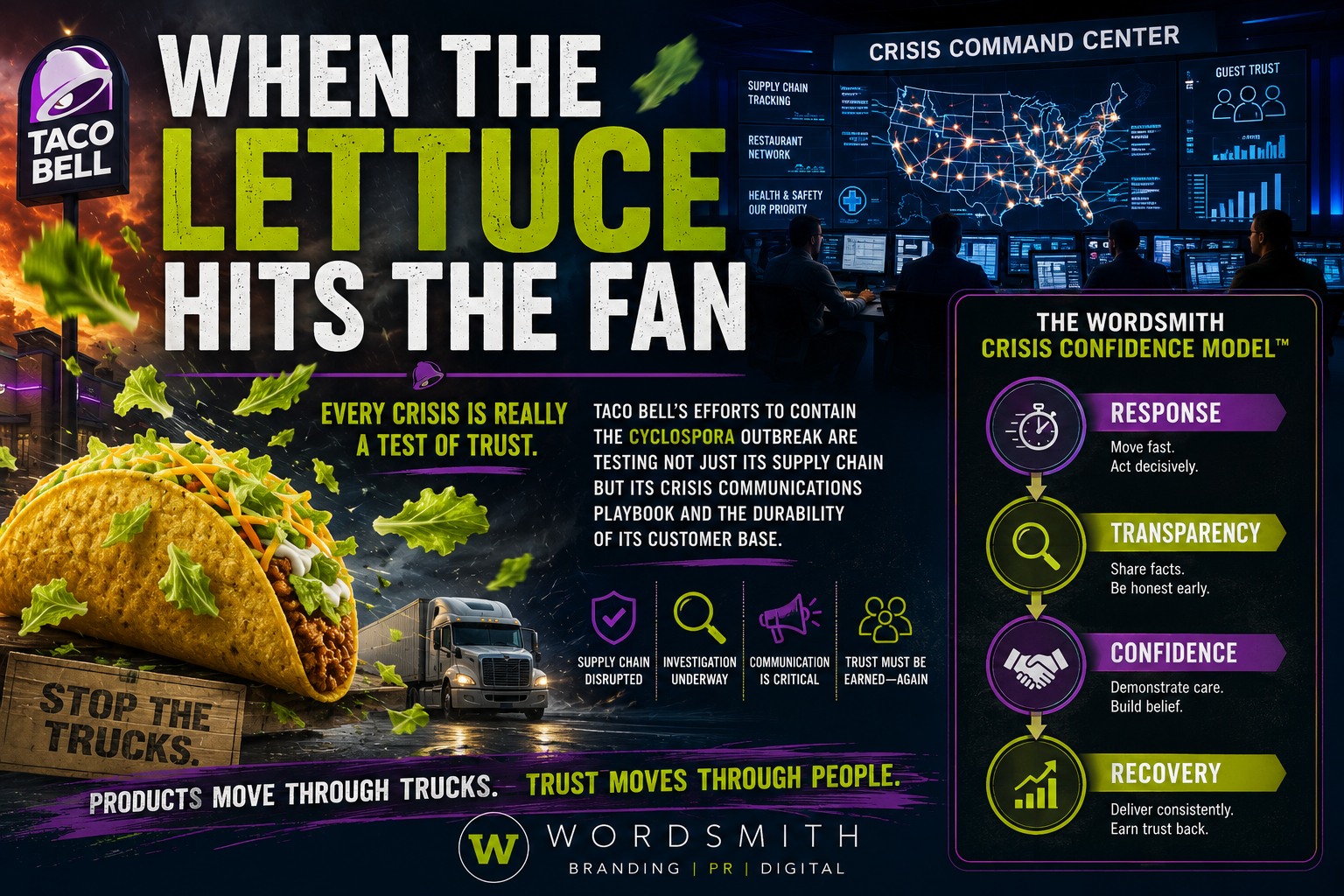
That’s the reality Taco Bell now faces as it works to contain the cyclospora outbreak linked to shredded iceberg lettuce supplied to restaurants in several states. Company leaders moved quickly to remove affected ingredients, activate crisis teams and coordinate with suppliers and regulators as investigations continued.
For communicators, however, this story isn’t really about lettuce.
It’s about leadership.
Certainty Casualty
The first casualty isn’t sales. It’s certainty. Consumers don’t expect perfection. They expect confidence. The moment uncertainty enters the conversation, customers begin asking questions.
Can I trust this brand? Is the company being honest? Are they moving fast enough? Do they care more about me than protecting themselves? These questions rarely appear on financial statements.
Yet they determine how quickly a brand recovers.
Every Crisis Starts Long Before the Headlines
The Wall Street Journal described Taco Bell’s rapid response: executives convening late-night meetings, activating a war room and racing to halt distribution while tracing products through an extraordinarily complex supply chain.
That work is operational. But what customers remember is emotional. They remember how the company communicated. They remember whether leaders appeared calm. They remember transparency. They remember accountability.
Because crises don’t simply test food safety. They test credibility.
The WordSmith Crisis Confidence Model™
At WordSmith, I believe every organizational crisis follows the same progression:
Response → Transparency → Confidence → Recovery
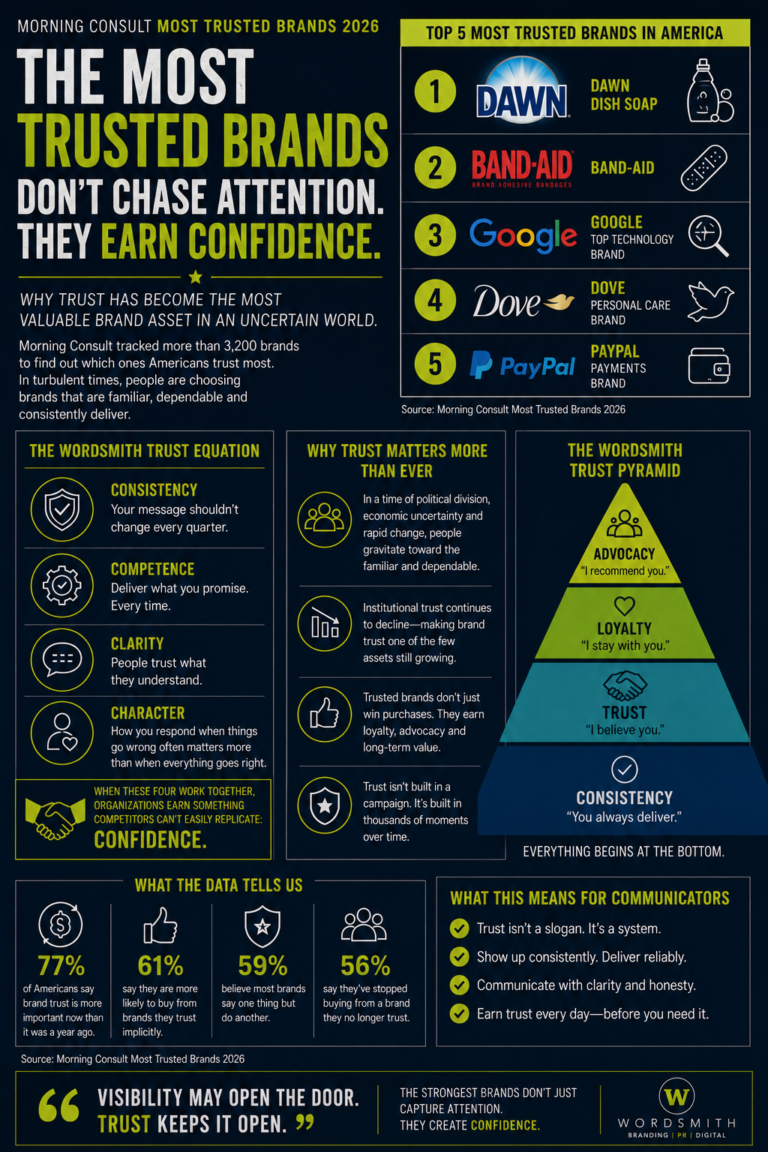
Move quickly. Communicate honestly. Demonstrate accountability. Earn trust back through consistent action. Miss any one of those steps, and recovery becomes exponentially harder. Check out what the world’s most trusted brands have in common.
Reputation Travels Faster Than the Supply Chain
Supply chains move products. Communications move perceptions.
In today’s world, those perceptions often move faster.
A single social media post.
A television interview.
A delayed statement.
An unclear explanation.
Every hour becomes part of the brand story. That’s why crisis communication isn’t a department. It’s leadership in action – leadership in public.
Companies That Recover Best
History offers plenty of examples. Some organizations hide. Others delay. Some say, “No comment.” Check out the WordSmith dispatch on why that never works.
The strongest brands understand something different. Silence rarely fills a vacuum. Speculation does.
That’s why organizations that recover most successfully typically move with urgency, empathy and transparency — even when every answer isn’t yet available.
Customers can forgive mistakes. They rarely forgive evasiveness.
The Bigger Lesson
Whether you’re leading a restaurant chain, a health care system, a manufacturer or a nonprofit — every organization depends upon suppliers. Every organization faces risk. Every organization will eventually encounter a defining moment.
The question isn’t whether a crisis will come. The question is whether trust has already been built before it arrives. Discover why trust, once lost, is difficult to rebuild.
The WordSmith Perspective
I’ve often written that:
Visibility opens the door.
Trust keeps it open.
A crisis reveals whether that trust was ever truly there.
Because reputation isn’t built during the emergency.
It’s revealed by it.
The WordSmith Takeaway
Taco Bell’s challenge isn’t simply restoring its supply chain. It’s restoring certainty. And that’s a lesson every communicator should remember.
Products move through trucks.
Trust moves through people.
The organizations that recover fastest aren’t always the ones that make the fewest mistakes. They’re the ones that communicate with the greatest clarity when everything else feels uncertain.
Every company has a supply chain. Every leader has a reputation. When one breaks, the other is tested.

ABOUT THE AUTHOR