👉 The Trust Deficit: What Leaders Must Understand About Media Credibility
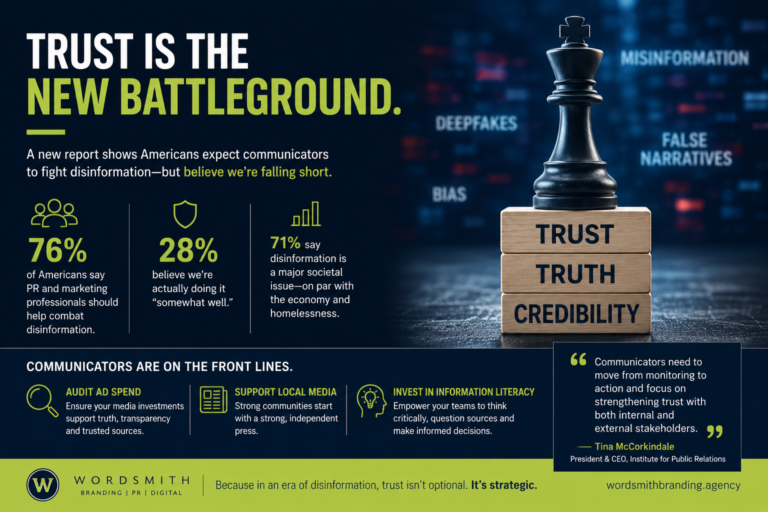
Trust in media is no longer assumed—it’s actively questioned. For leaders, this shift isn’t just cultural—it’s strategic.
The ability to communicate with credibility now defines influence.
Point of View: Credibility is no longer controlled by institutions—it is earned in real time through clarity, consistency, and narrative discipline.
What’s Changing
The United States ranks last in media trust — at 29% — among 92,000 news consumers surveyed in 46 countries, a recent report found.
That’s worse than Poland, worse than the Philippines, worse than Peru. (Finland leads at 65%.)
The shift isn’t just about declining trust—it’s about the collapse of a single, shared source of truth. In its place is a fragmented ecosystem where perception is shaped faster than facts can catch up.
The annual digital news report from the Reuters Institute for the Study of Journalism at Oxford also found some improvement in trust in nearly all the countries surveyed – probably thanks to COVID-19 coverage – but not in the U.S. where the low rating was flat year to year.
One explanation, though not necessarily the only one, is the extreme political polarization in the U.S. This study, like many others, found extremely high levels of distrust – 75% of those who identify as being on the right thought coverage of their views is unfair.
Local news, both print and broadcast, fared better than national news. However, the findings for struggling local print outlets were not all good.
Interest in local news and willingness to pay for it was not strong. Only 21% in the U.S. said that they pay for news online. Of those who do, 31% said they pay for The New York Times, 24% for The Washington Post and only 23% for the site of a local or regional paper.
The most popular local news topic, by a wide margin (62%), was weather. Staples of local newspaper coverage like politics (33%) and education (16%) lagged. Those surveyed indicated a preference for local broadcast (52%) as a source over newspapers (16%).
Why It Matters for Leaders
What definition of trust is being used? And what strategies could U.S. news outlets pursue to improve the situation? Researchers at Poynter received answers from Rasmus Kleis Nielsen, director of the institute and one of the authors of the report.
“We leave it to the respondent to define what trust means for them,” Nielsen wrote, “and ask a general question about trust in news, without specifying means of delivery. The term is intuitively meaningful to people, at least we have never had anyone query it.”
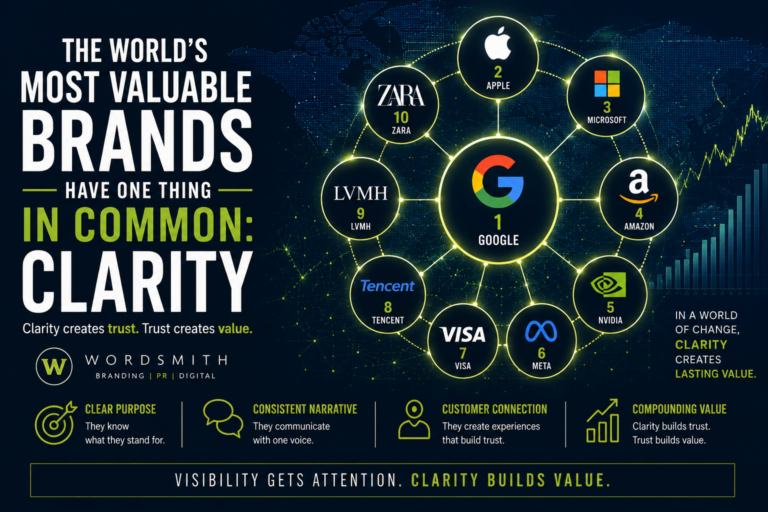
Credibility is no longer a function of reach—it’s a function of narrative control.
The basic survey question is, “I think you can trust most news most of the time.” Follow-ups show that users give a higher trust rating to news they themselves consume and a lower rating to news on social media.Credibility is no longer a function of reach—it’s a function of narrative control.
What This Means in Practice
- Clarity over volume
- Narrative over noise
- Consistency over reaction
Nielsen suggested three potential solutions to the low trust level in the U.S:
“Many Americans do not feel that news organizations are covering people like them fairly, and those who say the news media are treating them less fairly are less likely to trust the news. This includes, for example, younger people (young women, in particular), Black Americans and Hispanic Americans.”
More inclusive treatment of their concerns will help, he said, with the qualifier that change in trust will take a while given how long these groups have felt left out.
“Political partisans, especially on the right, trust the news much less and also do not feel news organizations cover their views fairly. News media may be able to respond to this concern.
“The question is what compromise that might entail on, for example, calling out unsubstantiated allegations of election fraud. And how would any attempts to appeal more to those on the political right, often older white Americans, combine with attempts to appeal to younger and more diverse audiences, who are often more liberal? It is a clear option, but there may be trade-offs and choices here.”
Interestingly, partisans, including conservatives, at least say that they prefer a range of views (74%) and neutral treatment of issues (66%) rather than reports that just reinforce their views.
“Third, just one in five Americans identify going directly to a news site or news app as their main way of getting news online, underlining the weak connection news media have with much of the public. As we have shown elsewhere, trust is often in part about familiarity. It’s hard to see how news media can win people’s trust if they often have only a few, fleeting points of contact with them, frequently mediated by social media, an environment people generally do not associate with trustworthy news.
As we explored in What Makes a Story Credible, , trust is no longer assumed—it must be earned.
“The work, however good, does not speak for itself if people rarely see it. At least for those parts of the media where people’s opinion of the brands in question would improve if they got to know them better, based their perception more on personal experience and less on stereotypes or cues taken from often highly partisan voices, it seems to me some of the U.S. news media have, basically, a communications and marketing problem.”
The study validates other often observed problems publishers face:
There is a sizable cohort now who avoid news altogether; either they don’t have time or find it depressing.
A larger percentage (51%) is “not concerned” about the financial circumstances of the media compared to 31% who say they are aware the business is less profitable than it used to be.
Organizations that lead today don’t just communicate—they define the narrative others respond to.
If you’re rethinking how your organization shows up in a fragmented media environment, let’s start that conversation.
Originally published by Deane | Smith Agency. Updated for WordSmith.

ABOUT THE AUTHOR