Why Most Messaging Fails (And How to Fix It)!
Most organizations don’t struggle because they lack something to say.
They struggle because what they say doesn’t land.
Messaging is developed.
Campaigns are launched.
Content is published.
And yet —
The audience doesn’t engage.
The message doesn’t stick.
The impact falls short.
The instinct is to push harder.
More content.
More channels.
More visibility.
But messaging rarely fails because of effort.
It fails because of misalignment.
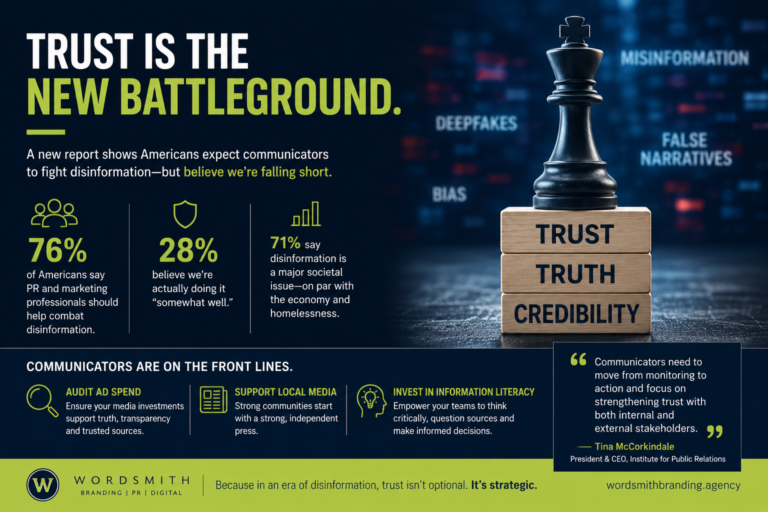
At WordSmith, we see the same breakdown happen again and again — across industries, teams, and leadership levels.
Messaging fails in three predictable ways:
- It’s Not Grounded in Clear Positioning
Strong messaging starts with clarity.
What does the organization stand for?
What makes it different?
Why does it matter?
When those questions aren’t answered clearly, messaging becomes generic.
It sounds right—but says very little.
And when everything sounds the same, nothing stands out. Check out the WordSmith take on clear messaging!
- It’s Not Expressed Consistently
Even strong ideas can lose impact when they’re expressed inconsistently.
Different teams use different language.
Tone shifts across channels.
Key messages evolve—or disappear—over time.
To the organization, it feels like communication.
To the audience, it feels like confusion.
- It Breaks Down in Execution
Messaging isn’t just what’s written—it’s what shows up.
In real time.
Across audiences.
Under pressure.
When execution lacks discipline, even well-crafted messaging loses coherence.
The result is fragmentation.
And fragmentation erodes credibility.
So how do you fix it?
You don’t start with more messaging.
You start with alignment.
Clear positioning.
Consistent narrative.
Disciplined execution.
These aren’t separate functions.
They are a system. Dive into the 3-pronged WordSmith messaging alignment model strategy.
When that system is aligned, messaging works.
It resonates.
It builds trust.
It drives action.
When it’s not, even strong ideas fall flat.
This is the difference between communication that fills space—and communication that shapes perception.
Because in today’s environment, messaging isn’t just what you say.
It’s how you’re understood!